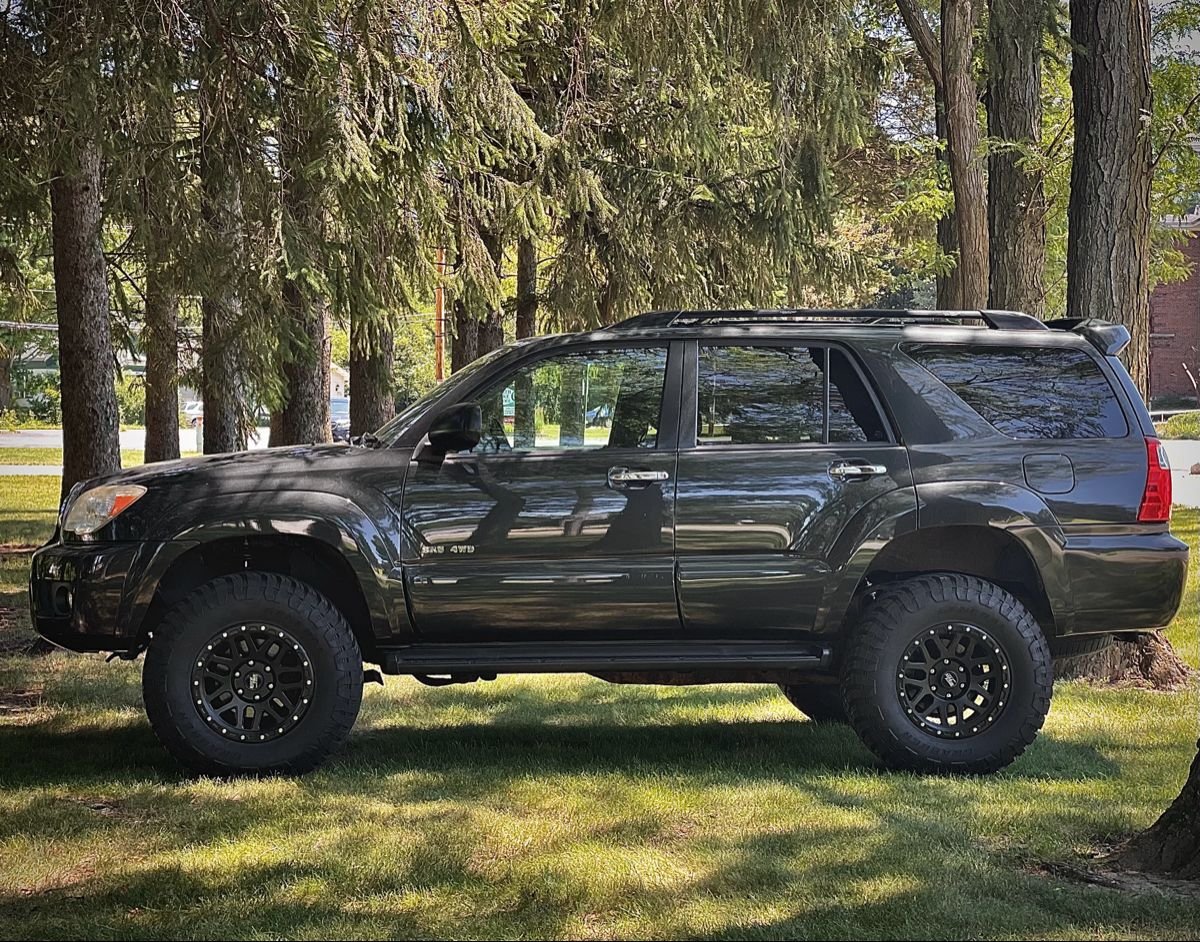
The Toyota 4Runner isn't just another SUV; it's a statement. For nearly four decades, this rugged, body-on-frame warrior has carved out a unique legacy, blending unstoppable off-road prowess with everyday reliability. Understanding the Toyota 4Runner Generation Overview & Key Features isn't just about specs and dates; it's about appreciating an icon's enduring evolution, from its humble truck-based beginnings to its modern, trail-blazing forms. Whether you're eyeing your first 4Runner, upgrading, or simply an admirer, deciphering the differences across its six distinct generations reveals why this vehicle inspires such fierce loyalty.
From its genesis as a souped-up pickup to its current, tech-forward iteration, the 4Runner has consistently adapted while staying true to its core identity: an adventurer's dependable companion. Let's peel back the layers and explore the journey of a true automotive legend.
Toyota 4Runner Generations: At a Glance
For those eager for the highlights, here's a quick run-down of what makes each 4Runner generation stand out:
- 1st Gen (1984-1989): The Original Truck-SUV Hybrid. Began as a Toyota pickup with rear seats and a removable hardtop. Famous for its solid front axle (1985 model year) and the "unkillable" 22re engine.
- 2nd Gen (1990-1995): SUV Identity Takes Shape. The first generation developed solely as an SUV, introducing a popular 4-door option and the signature roll-down rear hatch window.
- 3rd Gen (1996-2002): The Modern Classic Workhorse. A complete redesign with a new chassis and the legendary 3.4L V6 engine, known for its bulletproof reliability and extensive aftermarket support.
- 4th Gen (2003-2009): Power & Refinement with a V8. Significant platform update, ditching the 4-cylinder for robust 4.0L V6 and the coveted 4.7L V8 (the only generation to offer a V8).
- 5th Gen (2010-2024): The Enduring Icon. One of the longest-running generations, featuring a modern look, the reliable 4.0L V6, and advanced off-road tech like KDSS, with unparalleled aftermarket support.
- 6th Gen (2025-Present): The Turbocharged Future. Marking a dramatic shift with an all-new turbo 4-cylinder engine and the shared TNGA-F platform from other Toyota truck lines.
The Genesis: 1st Gen (1984-1989) – Truck Heart, SUV Soul
May 1984 marked the birth of a legend, though it hardly looked like the SUVs we know today. The very first Toyota 4Runner, produced from 1984 to 1989, wasn't conceived from a blank slate; it was an ingenious adaptation. Essentially, Toyota took their rugged Hilux pickup, bolted in some rear seats, and topped it with a removable fiberglass hardtop over the bed. This meant you got the utility of a truck mixed with the enclosed cabin of an SUV, a novel concept at the time. Crucially, this is the only 4Runner generation to ever offer a removable top, a feature that, if you can find one today, makes it an instant classic for open-air adventures.
Under the hood, drivers had a couple of choices. The venerable 22re 4-cylinder engine was a mainstay, earning a reputation for being practically "unkillable" if maintained. While it offered decent gas mileage (around 19 city/23 highway mpg), it wasn't exactly a speed demon. Unless, of course, you managed to snag the rare 22re turbo variant, which added a much-needed kick. Later, a 3.0L V6 also joined the lineup. Both manual and automatic transmissions were available, giving buyers options for their preferred driving experience.
A true highlight for enthusiasts, especially rock crawlers, is the 1985 model year. This specific year is highly desired because it was the last to feature a solid front axle, offering superior articulation and durability in extreme off-road conditions, and the first to introduce fuel injection, combining old-school robustness with modern efficiency.
However, owning a 1st Gen 4Runner today comes with its challenges. These vehicles lacked significant body support, making them prone to rust and rot in the quarter panels and floors. Finding replacement interior parts can also be a scavenger hunt, often requiring donor vehicles from salvage yards. Despite this, the aftermarket support is surprisingly strong. Enthusiasts can find a wide range of parts, from bolt-on transmission adaptors for V8 swaps (think Chevy 350 or Ford 302) or the newer 3.4L V6, to straight-axle swap kits for later Independent Front Suspension (IFS) models. Lift kits, steel plate bumpers, skid plates, sliders, and even roll cage kits are all readily available, proving the enduring appeal of this foundational 4Runner.
Evolving Identity: 2nd Gen (1990-1995) – Finding Its Footing
Building on the success of its predecessor, the 2nd Gen Toyota 4Runner, released in August 1989 and produced through 1990-1995, marked a significant turning point. This was the first 4Runner developed solely as an SUV, shedding its direct pickup truck skin. While it still retained a rare 2-door configuration, the more common and popular 4-door version made its debut, cementing its place as a family-friendly adventurer. Crucially, the removable top of the 1st Gen was gone, replaced by a permanent hardtop design.
This generation introduced several signature features. You might spot some 2nd Gens with a unique swing-out spare tire carrier on the rear bumper – this was the only generation to offer such an option directly from the factory. More famously, the 2nd Gen continued and truly popularized the "4Runner-famous" roll-down rear hatch window. This beloved feature, allowing fresh air and easy access to the cargo area, would become a hallmark of the 4Runner for generations to come.
Engine options included both 4-cylinder and the familiar 3.0L V6. The V6 offered a modest power bump over the 22re 4-cylinder, aiming for a more refined driving experience. Unfortunately, similar to the 1st Gen, the 2nd Gen suffered from a lack of exterior and interior structural support, making parts replacement a challenge that often relies on salvage operations. A more specific and notorious issue for the 3.0L V6 was its propensity for head gasket failures, often attributed to the exhaust drying them out prematurely.
Despite its quirks, the 2nd Gen remains a popular choice for customization and off-roading. Its body-on-frame design provides an excellent platform for modifications. Enthusiasts continue to utilize bolt-on transmission adaptors for V8 or 3.4L V6 swaps, and straight-axle swap kits are readily available to enhance its off-road prowess, even though the factory IFS performs quite capably. A wider variety of aftermarket body armor, including steel plate bumpers, skid plates, sliders, and roll cage kits, further enhances its appeal to those looking to build a serious trail rig.
The Legend Begins: 3rd Gen (1996-2002) – The "Go-To" Off-Roader
Ask any seasoned 4Runner enthusiast for a recommendation, and the 3rd Gen (1996-2002) will almost certainly come up. Released in August 1996, this generation represented a complete overhaul, with a whole new design, chassis, and driveline. It fully embraced its SUV identity, coming only in a 4-door configuration, and thankfully, it retained the beloved rear hatch with its signature roll-down window.
Under the hood, the 3rd Gen offered a less common 2.7L 4-cylinder engine, but the real star was the 3.4L V6. This engine, shared with the 1st Gen Toyota Tacoma, quickly became legendary for its reliability. It's not uncommon to find 3rd Gen 4Runners with this engine still running strong past 300,000 miles, making it one of the most trusted powertrains in the lineup. Many consider the 3.4L V6 the best motor for off-roading, primarily due to its unwavering reliability; its main maintenance concern is a timely timing belt replacement. While the engine itself is stout, owners have noted brakes as a recurring issue, with one example needing multiple replacements over 210,000 miles.
One of the most exciting features for off-roaders was the availability of a factory rear locker on some models, a highly sought-after option that significantly enhances traction in challenging terrain. This era truly saw the beginning of mainstream, mass-produced aftermarket upgrades for the 4Runner. While it still lacked the intense body panel support of modern vehicles, parts availability improved significantly, thanks to shared components with other Toyota models and a burgeoning aftermarket.
If you're looking for a vehicle that perfectly balances creature comforts with serious off-road capability, the 3rd Gen is your "go-to." Its aftermarket support is immense: optional superchargers for the 3.4L, straight-axle swap kits, long-travel suspension kits, various lift kits, comprehensive skid plates, full undercarriage armor, roll cage kits, drawer systems, steel plate/tube bumpers, and an array of lighting brackets are all readily available. Need more traction? ARB and other locker options abound. This robust customization ecosystem means you can tailor a 3rd Gen for virtually any adventure you can imagine. Indeed, for many, the 3rd Gen represents the pinnacle of what makes the Toyota 4Runner generations so special.
Power & Refinement: 4th Gen (2003-2009) – Introducing the V8
The 4th Gen Toyota 4Runner, produced from 2003 to 2009, represented another significant leap forward in design and capability. This generation arrived with a major platform update, featuring unique styling, a newly redesigned chassis, and a refined driveline. It notably eliminated the 4-cylinder engine option entirely, signaling a push towards more powerful and capable vehicles.
Under the hood, buyers had two robust choices: a strong 4.0L V6 or the highly coveted 4.7L V8. Sourced directly from the Tundra, this V8 engine marked a historic first and last for the 4Runner; it was the only generation ever to offer a V8, making it a powerful draw for those who need extra muscle. Both engines were exclusively paired with an automatic transmission and provided ample power with surprisingly good fuel economy for their size. The 4.7L V8, in particular, became the engine of choice for serious towing or those planning massive lifts, thanks to its exceptional torque.
While both engines are widely regarded as "bulletproof," the 4.7L V8 does have a common known issue: exhaust manifold cracks or leaks, which can lead to annoying exhaust ticks. Otherwise, these powertrains are incredibly durable.
For off-road enthusiasts, the 4th Gen maintained the strong foundation laid by its predecessors. It offered a similar array of off-road upgrades to the 3rd Gen, meaning you could still equip it with aggressive suspension, armor, and recovery gear. However, one difference was the reduced availability of common roll cage kits, often requiring custom fabrication for those seeking maximum protection. Despite this, its capability, particularly with the V8, made it an appealing option for those who wanted a blend of modern comfort, power, and genuine trail readiness. This generation further solidified the 4Runner's reputation for rugged reliability and adventurous spirit.
Modern Icon: 5th Gen (2010-2024) – Longevity and Lifestyle
Few vehicles boast a production run as impressive as the 5th Gen Toyota 4Runner, which graced showrooms from 2010 to 2024. Spanning a remarkable 14 years, this generation has become one of the most popular 4Runners since the revered 3rd Gen. It received a notable facelift after the 2013 model year, updating its aesthetics and keeping it fresh for over a decade. The 5th Gen rolled out with a whole new look and chassis, evolving the 4Runner's distinctive rugged styling.
Under the hood, the powerful 4.7L V8 was discontinued, leaving the reliable 4.0L V6 (paired with an automatic transmission) as the primary engine. While a rare 2.7L 4-cylinder automatic option was available in 2010, it quickly faded from the lineup. The current 4.0L V6 is lauded for having "more pep" than its 4th Gen counterpart and has proven to be incredibly robust, with no major widespread issues.
The 5th Gen introduced a diverse lineup of models, including the SR5, Trail, TRD Pro, TRD Off-Road, and Limited, each offering a slightly different flavor of capability and luxury. Importantly, all of these models are suitable for off-road use right out of the gate. A significant feature introduced in this generation was the KDSS (Kinetic Dynamic Suspension System). KDSS intelligently links the sway bars, providing excellent on-road stability and comfort while sensing wheel drop or slippage off-road to allow for greater wheel articulation. This system offers fantastic performance for general off-road use and daily driving, but it can present challenges for enthusiasts planning extreme long-travel suspension kits and may complicate certain modifications due to its integrated nature.
Out of the box, a 5th Gen 4Runner is considered "fire-road ready," capable of tackling most overland and light off-road trails without modification. For more serious challenges, further upgrades are recommended. The TRD Pro model comes factory-equipped with an upgraded Bilstein TRD tuned suspension, offering enhanced capability. Interestingly, a stock SR5 can often be more affordably and heavily modified for hardcore off-roading than special models, partly because it avoids KDSS, offering a simpler platform for suspension overhauls.
When it comes to aftermarket support, the 5th Gen is king. It offers an even wider and more diverse array of aftermarket bumpers, lights, suspension systems, roof racks, and lift kits than the previous two generations combined. If you can dream it, you can likely buy it for a 5th Gen. However, similar to the 4th Gen, common roll cage kits are generally not available off-the-shelf, typically requiring custom fabrication. The sheer volume of options available for current Toyota 4Runner generations like the 5th Gen means you can truly personalize your rig.
The Future is Now: 6th Gen (2025-Present) – Turbocharged New Era
The automotive world eagerly awaited this moment, and the 6th Gen Toyota 4Runner (2025-Present) delivers a truly dramatic evolution. This most recent update heralds a new era for the iconic SUV, primarily through its powertrain. The most significant change is the introduction of an all-new turbo 4-cylinder engine, which is the only engine available across the lineup. This marks a departure from the naturally aspirated V6 that has powered 4Runners for so long, promising increased torque and potentially better fuel efficiency.
Underpinning the 6th Gen is Toyota's robust TNGA-F platform. This shared architecture is a cornerstone of Toyota's modern truck and SUV lineup, also found in the Tacoma, Tundra, and Sequoia. This strategic move makes the 6th Gen 4Runner the closest relative to the Tacoma since the 3rd Gen, suggesting a strong focus on capability, durability, and modularity. Expect a blend of advanced technology, enhanced off-road features, and a thoroughly modern driving experience, all while aiming to uphold the 4Runner's legendary reputation for ruggedness. This new generation promises to redefine what we expect from the venerable 4Runner, embracing forced induction and a common platform to carry its legacy forward.
Choosing Your Adventure: Which 4Runner Generation is Right for You?
With six distinct generations, each with its own character and capabilities, deciding which 4Runner is your ideal companion can feel daunting. Here’s how to navigate the choices, tailored to your adventure style:
- For the Purist & Custom Builder (1st Gen & 2nd Gen): If your vision includes a highly customized rig, straight-axle swaps, roll cages, or even V8 engine conversions, the 1st and 2nd Gens offer the maximum potential for old-school cool and intense modification. The 1985 1st Gen, with its solid front axle, is a particular gem for rock crawling. Be prepared for rust remediation and the hunt for vintage parts, but the reward is a truly unique, highly capable machine.
- For the "Go-To" Off-Road Workhorse (3rd Gen): Want a balance of modern creature comforts and legendary off-road capability without breaking the bank? The 3rd Gen is your champion. With its "unkillable" 3.4L V6, optional factory rear locker, and an aftermarket that's practically boundless, it's widely regarded as the best bang-for-your-buck off-roader. It's old enough to be affordable for modifications but new enough to be a reliable daily driver.
- For Power & Towing (4th Gen): If you crave more power for towing trailers, hauling gear, or simply appreciate the effortless torque of a V8, the 4th Gen is uniquely positioned. Its available 4.7L V8 makes it a standout. It offers a more refined ride than earlier generations while still being a formidable off-roader. This is your choice if you need that extra grunt for specific tasks or just want a smoother, more powerful daily drive.
- For Modern Capability & Lifestyle (5th Gen): The 5th Gen is the perfect blend of modern aesthetics, robust capability, and a vast aftermarket. Whether you're hitting fire roads, overlanding, or daily driving, it excels. For serious off-roading, modifications are readily available, and its long production run means parts and knowledge are abundant. If you want a 4Runner that looks current and can be tailored for any adventure, from mild to wild, the 5th Gen is a prime candidate. If you're simply exploring what makes all the Toyota 4Runner generations so beloved, start here.
- For the Cutting Edge & Efficiency (6th Gen): If you're drawn to the latest technology, improved fuel efficiency (likely), and the higher torque of a turbocharged engine, the 6th Gen is your answer. It will come with the newest safety features and creature comforts, wrapped in a modern package on a proven truck platform. This is for the buyer who wants the newest iteration of the 4Runner legend.
Maintaining Your Legend: Common Questions & Ownership Tips
Regardless of the generation, owning a Toyota 4Runner means joining a community built around reliability, adventure, and customization. Here are some common questions and essential tips:
- How reliable are 4Runners really? Exceptionally reliable. Generations like the 3rd Gen (3.4L V6) and 4th Gen (4.0L V6 and 4.7L V8) are famous for lasting well over 300,000 miles with proper maintenance. Even the "unkillable" 22re in the 1st Gen lives up to its name. Consistent oil changes, timing belt/chain replacements (where applicable), and addressing known issues promptly are key.
- What are the most common issues to watch for?
- 1st & 2nd Gen: Rust (especially floors, quarter panels), finding interior/exterior parts (salvage dependent). 2nd Gen 3.0L V6 is prone to head gasket issues.
- 3rd Gen: Brakes can be a recurring wear item. Timing belt on the 3.4L V6 is a critical maintenance item, not an "issue."
- 4th Gen: 4.7L V8 can develop exhaust manifold cracks/leaks. Otherwise, both V6 and V8 are solid.
- 5th Gen: KDSS (if equipped) can add complexity to some suspension modifications but is generally very reliable. No major engine issues.
- 6th Gen: Too new to tell, but turbo engines will require diligent oil changes and potentially different maintenance routines.
- How extensive is the aftermarket support? It's legendary. The 3rd, 4th, and especially 5th Gens boast a truly massive aftermarket for everything from lift kits and suspension components to armor, lighting, roof racks, and interior storage solutions. Even the older 1st and 2nd Gens have a dedicated following with specialized parts available. This means you can truly build the 4Runner of your dreams, no matter the starting point.
- Can a stock 4Runner go off-road? Absolutely. Even a stock SR5 5th Gen can handle fire roads and many moderate trails with ease. Models like the TRD Off-Road and TRD Pro come with enhanced off-road features (locking differentials, crawl control, multi-terrain select) that make them even more capable straight from the factory. The body-on-frame design inherently provides a robust platform for adventure.
The Enduring Legacy of the 4Runner
The Toyota 4Runner has earned its place as a revered automotive icon, not just for its enduring design or its unyielding reliability, but for its spirit of adventure. Each of the Toyota 4Runner generations has contributed a unique chapter to this ongoing saga, adapting to evolving demands while steadfastly holding onto the core values that define it: capability, durability, and a steadfast commitment to exploring the path less traveled.
From the pioneering 1st Gen to the innovative 6th Gen, the 4Runner continually demonstrates that a vehicle can be both immensely practical and profoundly inspiring. Whether you're seeking a project vehicle to build into an off-road beast, a comfortable daily driver that can handle weekend adventures, or the latest and greatest in Toyota's rugged lineup, there's a 4Runner generation waiting for you. Dive into its history, understand its evolution, and you'll quickly discover why, for countless enthusiasts, the 4Runner isn't just a vehicle—it's a way of life.