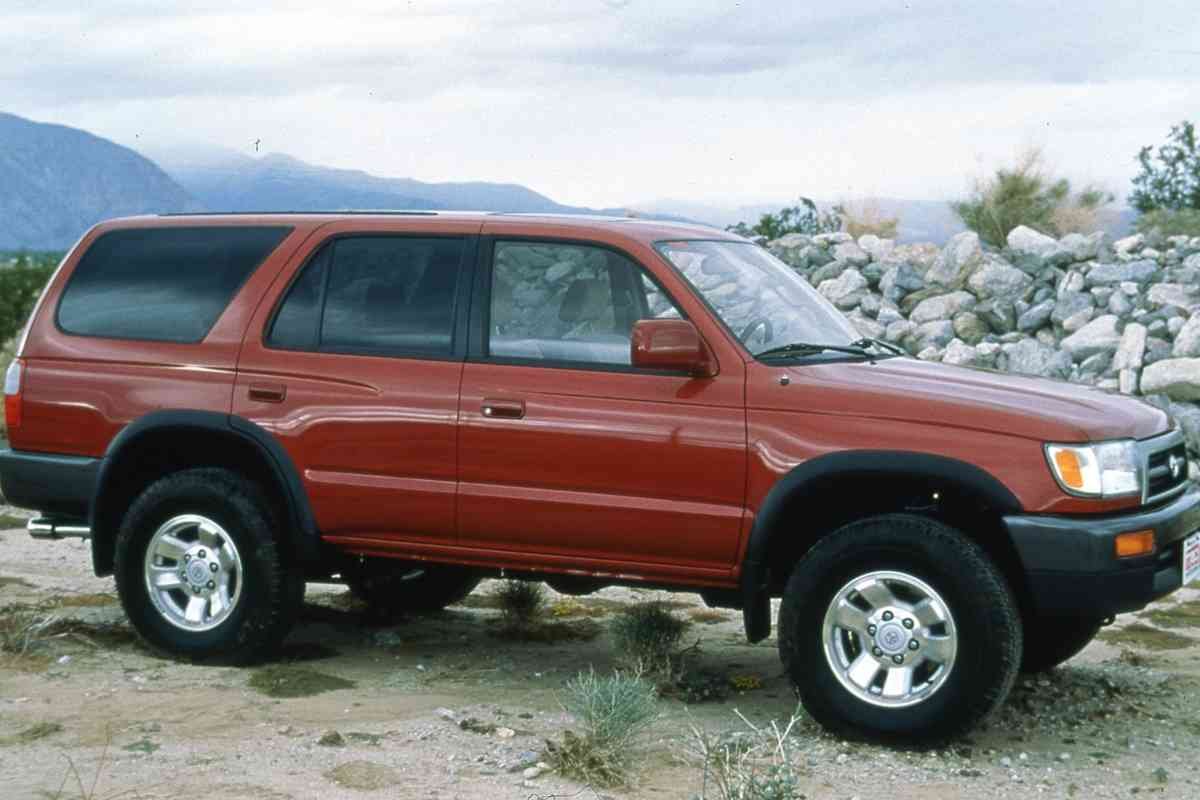
You’re eyeing a Toyota 4Runner, an iconic nameplate synonymous with rugged capability and enduring reliability. It’s a smart choice for adventure-seekers and families alike, but knowing the common issues & reliability trends by 4Runner generation is crucial. Not all 4Runners are created equal, and understanding which model years shine—and which might leave you stranded—can save you a significant headache (and a hefty repair bill).
From navigating mountain trails to hauling gear, the 4Runner has a legendary reputation. But like any long-lived dynasty, its generations have distinct personalities, strengths, and a few skeletons in the closet. This guide will arm you with the insider knowledge to pick the perfect pavement-pounder or trail-tamer for your next adventure.
At a Glance: Your 4Runner Reliability Cheat Sheet
- The Golden Age: 3rd Generation (1996-2002) is widely revered for its robust build and dependable engines. Later 5th Gen models (2017-2021) also earn high marks.
- Rust Is the Ultimate Foe: Especially for older models (2nd and 4th Gens), severe frame rust can be a deal-breaker. Always inspect the undercarriage!
- Engine Woes: The 2nd Gen's 3.0L V6 is notorious for head gasket failures. The early 4th Gen also saw these issues.
- Modern Tech Trade-offs: Newer 5th Gen models offer improved safety but early iterations had electrical and infotainment quirks. Older models often lack advanced safety aids.
- Resale Value King: Regardless of generation, 4Runners hold their value exceptionally well, making them a wise investment if maintained properly.
The 4Runner Legacy: A Brief Overview
The Toyota 4Runner carved its niche as a go-anywhere, do-anything SUV, evolving from a basic pickup truck with a fiberglass shell into the sophisticated yet rugged vehicle we know today. Its consistent popularity stems from a reputation for bulletproof reliability, strong off-road performance, and surprising longevity. But "reliability" isn't a blanket term that applies uniformly across every single model year. Each generation brought new designs, engine options, and, inevitably, a unique set of challenges.
Understanding these evolutionary shifts helps you identify the gems and avoid the money pits. To truly grasp the journey, you might want to Explore 4Runner generations in more detail.
First Generation (1984-1989): The Truck with a Shell
The original 4Runner was essentially a Toyota Pickup with a backseat and a removable fiberglass shell. While foundational to the legend, this generation often gets a backseat for its perceived shortcomings.
Key Characteristics & Reliability Trends:
- Slow and Truck-Like: Criticized for being underpowered and feeling very much like its pickup truck donor. This made it less popular with buyers seeking a more refined SUV experience.
- Basic Utility: It was rugged and simple, which meant fewer complex systems to break down.
- Rust: As with many vehicles of its era, rust is a primary concern, particularly in areas exposed to road salt.
While tough, finding a first-generation 4Runner in good, un-rusted condition today is a rare feat, and they are typically less sought after by those prioritizing comfort or power.
Second Generation (1990-1995): The Head Gasket Headache
Often cited as one of the least reliable 4Runner generations, the second generation is infamous for specific, costly mechanical failures. This is a period many seasoned enthusiasts advise caution against.
Key Characteristics & Reliability Trends:
- The 3.0L V6 (3VZ-E) Head Gasket Catastrophe: This is the big one. The 3.0-liter V6 engine suffered from persistent and widespread head gasket failures. These failures often led to overheating, severe engine damage, and extremely expensive repairs. It's a deal-breaker for many prospective buyers.
- Major Frame & Suspension Rust: Beyond the engine, this generation is highly susceptible to significant rust on the frame and suspension components, especially in colder climates where road salt is used. This can compromise structural integrity and make maintenance a nightmare.
- Styling Shift: It moved closer to an enclosed SUV design, departing from the removable top of its predecessor.
Buyer's Beware: If you're considering a 2nd Gen, a full pre-purchase inspection by a trusted mechanic, with a particular focus on engine history (proof of head gasket replacement, ideally) and chassis rust, is non-negotiable. Many have had engine swaps to mitigate the original V6's issues.
Third Generation (1996-2002): The Gold Standard
This is the generation that cemented the 4Runner's legendary status. Widely celebrated for its exceptional quality, robust performance, and bulletproof reliability, the 3rd Gen is often considered the best of the bunch.
Key Characteristics & Reliability Trends:
- Unmatched Durability & Quality: Renowned for its sturdy construction, making it ideal for off-roading. These vehicles were built to last, with many still running strong today.
- Dependable Engine Options:
- 2.7-liter 4-cylinder (150 hp): A reliable, if somewhat underpowered, workhorse.
- 3.4-liter V6 (183 hp): The star of the show. This engine is legendary for its longevity and minimal issues, offering a great balance of power and reliability for families and off-roaders.
- Comfort & Modernization: Significant improvements in interior comfort and overall driving dynamics compared to previous generations.
- Late Gen Concerns (2001-2002): While generally excellent, the very end of this generation did show an increased likelihood of some issues, including early instances of head gasket problems (though far less prevalent than the 2nd Gen) and rust concerns, a precursor to problems in the next generation. This isn't a reason to avoid them outright, but warrants a closer look at these specific years.
The Verdict: If you can find a well-maintained 3rd Gen, especially a 1996-2000 model with the 3.4L V6, you've likely found a gem. They offer incredible value and are a testament to Toyota's engineering prowess.
Fourth Generation (2003-2009): The Rust and Dash Divide
The 4th generation introduced more power and luxury, including a V8 option, but it also brought a new set of pervasive and expensive problems, particularly in its early years.
Key Characteristics & Reliability Trends:
- Early Years (2003-2005) - The Worst Offenders:
- Severe Frame Rust: This is perhaps the most infamous issue. These model years are notorious for severe frame rust, often leading to structural compromise and expensive, sometimes impossible, repairs. This is a critical inspection point.
- Head Gasket Failures (V6): While not as widespread as the 2nd Gen, the 4.0L V6 in these years also experienced an increased rate of head gasket failures, requiring costly engine work.
- Cracked Dashboards: A common aesthetic, yet frustrating, problem where the dashboard materials would crack and warp, detracting significantly from the interior quality.
- Other reported issues included interior accessory problems, body/paint issues, braking failure, and engine/wheel problems.
- Mid Years (2006-2008) - Slight Improvement:
- Primarily suffered from persistent body and paint problems.
- The 2007 model year also saw issues with brakes, engine, and exterior accessories.
- Late Years (2009) - Transmission Troubles:
- The final year of the 4th Gen introduced transmission and drivetrain problems.
- V8 Option (4.7L - 235 hp, 315 lb-ft torque): A powerful addition for towing and performance, but the overall styling of this generation was not universally well-received, contributing to slower sales.
The Verdict: Approach 4th Gen 4Runners with extreme caution, especially 2003-2005 models. A thorough frame inspection is absolutely essential. While the V8 is appealing, the potential for rust and head gasket issues makes this a high-risk generation.
Fifth Generation (2010-Present): The Modern Classic
The current 5th generation has largely returned to the 4Runner's roots of rugged dependability, becoming a favorite for its blend of off-road prowess and daily usability. However, even this reliable generation has had its share of initial hiccups.
Key Characteristics & Reliability Trends:
- Generally Reliable & Durable: Overall, the 5th generation upholds the 4Runner's reputation for being long-lasting and dependable. It’s built to withstand diverse terrains and regular use.
- Engine & Performance: Primarily uses a durable 4.0-liter V6 engine (270 hp, 280 torque), offering solid performance and capability, often achieving 0-60 mph in around 7.5 seconds.
- Early Years (2010-2015) - Working Out the Kinks:
- 2010: Known for automatic transmission and electrical system issues.
- 2013-2014: These years experienced various electrical problems (radio freezing/turning off, door lock failures, including child safety locks), running boards getting stuck, and severe steering problems (shuddering at 55-65 mph). Owners also reported a tendency to veer in adverse weather and premature tire wear.
- 2015: The main concern was the infotainment center, which was prone to freezing, restarting, failing Bluetooth connectivity, and phone charging issues. Steering complaints and warped brake rotors were also reported.
- Later Models (2017-2021) - The Sweet Spot: These years are specifically recommended for their exceptional dependability and fewer reported issues, solidifying the 5th Gen's reputation.
- Safety Technology: Earlier 5th Gen models lacked advanced safety features like automatic braking and adaptive cruise control, only including a reversing camera. Later models have improved, but still lag some competitors.
The Verdict: The 5th Gen is a strong contender. If your budget allows, target 2017-2021 models for peak reliability and fewer of the early generation quirks. Even with earlier models, many of the infotainment/electrical issues may have been addressed by previous owners.
The Enduring Appeal: Why 4Runners Stand Out
Despite the generational quirks, the Toyota 4Runner continues to be a top choice for many. Its overall strengths often outweigh its weaknesses, contributing to its cult following.
The Upsides: Where 4Runner Shines
- Unmatched Reliability & Durability: Beyond specific years, the 4Runner platform is engineered to last, often exceeding expectations for vehicle lifespan. It handles daily commutes and challenging off-road conditions with equal poise.
- Affordable Maintenance: Compared to many other SUVs, 4Runner maintenance tends to be more affordable, thanks to widely available parts and a straightforward design that mechanics are familiar with.
- Capable Engine & Performance: The V6 engines across generations (especially the 3.4L in 3rd Gen and 4.0L in 5th Gen) are robust and capable, delivering sufficient power and torque for diverse terrains.
- Balanced Handling: Despite its bulky design, the 4Runner offers a surprisingly balanced ride, with smooth steering and easy maneuvering, even on challenging mountain roads.
- Practical Design & Utility: With seating for up to seven (in some configurations), comfortable first two rows, and flexible cargo space with fold-down rear seats, it’s a highly versatile vehicle. Sporty models like the SR5 offer attractive styling with practical features like roof rails and skid plates.
- Excellent Resale Value: This is a huge benefit. A study by iSeeCars.com showed a 4Runner’s 5-year depreciation at 38.5% compared to an average of 49% for all cars, meaning your investment holds its value remarkably well.
The Downsides: Where 4Runner Falls Short
- Fuel Economy: Let's be honest, the 4Runner isn't winning any awards for fuel efficiency. A 2019 model, for instance, typically yields around 17 mpg city and 21 mpg highway, and this worsens with heavy loads. Thankfully, it doesn't require premium fuel.
- Cost: New 4Runners can be expensive, with base models starting around $36,590 and off-road trims like the Nightshade Edition and TRD Pro reaching $45,000 to $50,570+. Its strong resale value also means used models command higher prices than many competitors.
- Safety Technology (Older Models): As noted, earlier 5th Gen models, like the 2019, lacked advanced safety aids such as collision alerts and blind-spot warnings, only including a reversing camera. It received a marginal rating from IIHS for front protection in crashes, though newer models have improved in this area.
- Entry/Exit: Its high ground clearance, while great for off-roading, can make climbing in and out difficult for children, the elderly, or those with mobility challenges.
Buying Smart: A Used 4Runner Buyer's Guide
Armed with knowledge about generational reliability, you're ready to make a more informed decision. Here's how to ensure you're getting a good deal and a reliable vehicle.
Budgeting for Your Adventure
The cost of a 4Runner varies significantly by generation, condition, and mileage.
- 1st & 2nd Generations (1984-1995): ~$5,000. These are typically project vehicles or require significant work.
- 3rd Generation (1996-2002): ~$5,000-$10,000. Exceptional value if you find a well-maintained example.
- 4th Generation (2003-2009): ~$10,000-$15,000. High risk for rust/engine issues in earlier years; later years might be better.
- Early 5th Generation (2010-2013): ~$20,000-$25,000. Entry point for the current body style.
- Mid-5th Generation (2014-2017): ~$25,000-$35,000. Good blend of updated styling and more resolved reliability.
- Late 5th Generation (2017-Present): ~$35,000-$45,000+. These are the sweet spot for reliability but come at a premium.
Average used prices from the last decade range from $15,625-$18,900 for a 2011 model to $32,950-$43,425 for a 2020 model, highlighting the strong market value.
Critical Inspection Points
- Frame and Undercarriage Inspection: This is paramount, especially for 2nd and 4th generation models, and any vehicle from regions using road salt. Look for perforations, severe scaling, or evidence of patch-up jobs. A small amount of surface rust is normal, but structural rust is a deal-breaker.
- Maintenance History Review: Always ask for service records. A comprehensive history indicates a diligent owner and can reveal potential recurring issues or major repairs.
- Engine and Transmission Check: Pay close attention to the 2nd Gen's 3.0L V6 for head gasket issues (look for milky oil, sweet-smelling exhaust, or persistent overheating). For 4th Gen V6s, also inquire about head gasket status. Check for smooth shifts in the transmission and any warning lights on the dash.
- Test Drive: Listen for unusual noises, feel for vibrations (especially steering shudder in 2013-2014 models), and ensure all electrical components work. Test 4WD/AWD systems if applicable.
- Professional Pre-Purchase Inspection (PPI): This is non-negotiable for any used vehicle, particularly a 4Runner given its specific generational weaknesses. A trusted mechanic can uncover hidden problems you might miss.
The Road Ahead: What to Expect from the 2025 4Runner
As the 4Runner saga continues, the upcoming 2025 model promises to blend its rugged heritage with modern advancements. Positioned as a counterpart to the Toyota Tacoma pickup, it’s shaping up to be a significant evolution.
Anticipated Features:
- Design & Comfort: Expect 20-inch wheels, a distinct hood scoop, and a luxurious faux leather interior, alongside adaptive dampers for improved body control. LED high beams will enhance night visibility.
- Powertrain: A familiar 4.0-liter V6 engine producing 270 horsepower, paired with a five-speed automatic transmission. This ensures reliability and ample power.
- Drivetrain Options: Offers rear-wheel, full-wheel, and four-wheel drive systems, maintaining its versatility across various terrains.
- Performance: Tested at 0-60 mph in 7.6 seconds, it will continue to offer spirited performance for its class.
- Handling & Utility: Anticipated to be lightweight, sporty, and highly capable for off-roading, with easier parking navigation and adaptability to diverse terrains. Expect improved, lighter steering.
- Towing: Features a powerful torque engine providing a robust 5,000 lbs towing capacity.
- Advanced Safety: A significant upgrade includes automatic high-beam headlamps, blind-spot monitor warnings, forward-collision warnings with automatic emergency braking, lane change assistance, and adaptive cruise control. This addresses a common criticism of previous generations.
The 2025 4Runner aims to combine the best of its rugged past with the safety and comfort demands of the present, setting a new benchmark for the legendary SUV.
Making Your Choice: Confidence on Four Wheels
Navigating the long and storied history of the Toyota 4Runner can feel like a deep dive, but understanding its common issues & reliability trends by 4Runner generation empowers you to make an incredibly smart purchase. Whether you're chasing the legendary reliability of a 3rd Gen, seeking the balanced modernity of a later 5th Gen, or patiently awaiting the innovations of the 2025 model, knowing the specific pitfalls and triumphs of each era is key.
Remember to prioritize a thorough inspection, especially for rust on older models, and always consult a trusted mechanic. With this knowledge in hand, you’re not just buying an SUV; you’re investing in a legacy of adventure, ready to tackle whatever road—or lack thereof—lies ahead. Go forth, explore, and enjoy the ride.