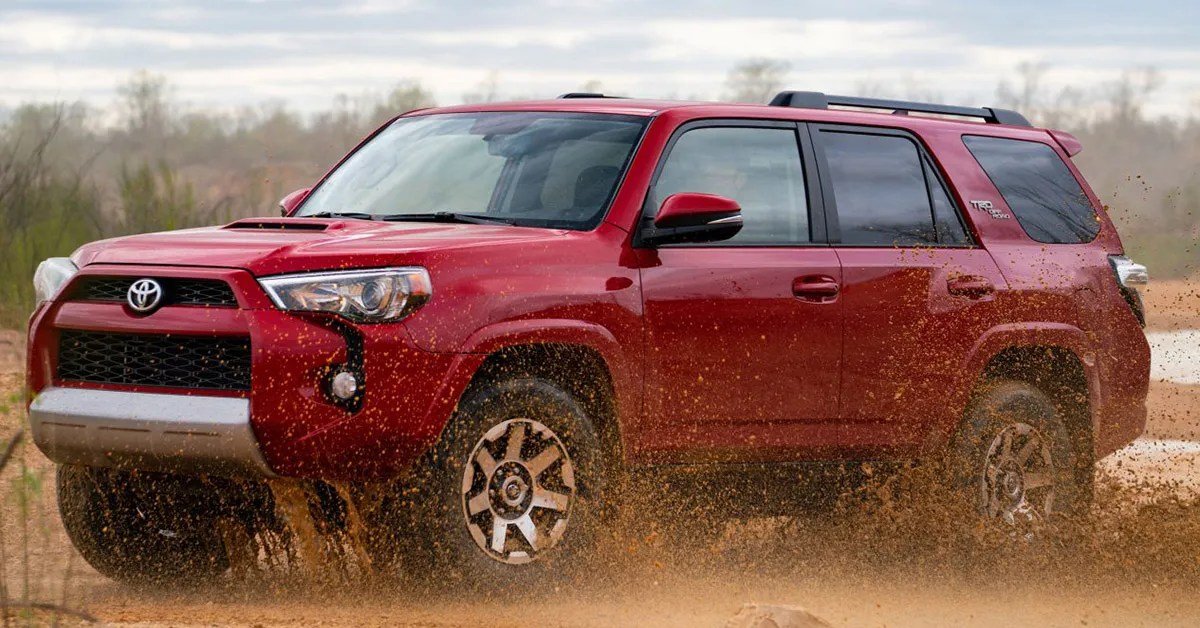
The Toyota 4Runner holds a unique place in the automotive world, almost defying the usual rules of depreciation. Its incredible staying power and enduring demand make understanding its 4Runner Resale Value & Market Insights by Generation crucial for anyone looking to buy or sell. If you're eyeing one of these rugged SUVs, you're not just buying a vehicle; you're investing in a legacy that consistently outperforms its peers in value retention.
You might think that such a durable and popular vehicle comes with an equally steep price tag, even used. And while that's often true, recent market shifts and strategic buying can unlock significant savings. Let's dig into what makes the 4Runner a perennial favorite and how you can leverage current market dynamics to make the smartest move.
At a Glance: Your Quick Takeaways
- The Toyota 4Runner boasts exceptional resale value, consistently ranking in the Top 10 for both 5-year and 7-year value retention.
- It depreciates only about 25% after five years, retaining an average resale value of around $40,175.
- Current average used 4Runner prices sit at about $34,992, which is significantly higher (27.70%) than the average used car price.
- Recent market trends show a slight dip, with 4Runner prices declining by 2.02% in the last 30 days, mirroring the broader used car market.
- The "depreciation sweet spot" for buying is typically a 2-4 year old model, offering substantial savings over buying new.
- Model years like 2024, 2023, and even 2025 are identified as offering strong value, with the 2024 retaining 92% of its useful life while costing 80% of new.
The Unstoppable 4Runner: Why Its Value Endures
From its debut in 1984, the Toyota 4Runner has carved out a reputation for rugged reliability, off-road prowess, and impressive longevity. This isn't just marketing hype; it's a driving force behind its extraordinary resale value. Unlike many vehicles that see rapid depreciation the moment they leave the lot, the 4Runner holds its worth like few others.
Think of it as a utility player that excels in every position. Its robust body-on-frame construction makes it a favorite for outdoor enthusiasts and those who simply want a vehicle that can take a beating and keep going. This fundamental durability, combined with Toyota's legendary engineering for Toyota 4Runner reliability ratings, creates a high demand for used models, which naturally keeps prices buoyant. Even with a recent 2.02% drop in used 4Runner prices over the past month, mirroring a broader 1.84% decline in the used car market, its average price of $34,992 still far outstrips the typical used vehicle.
Decoding Depreciation: The 4Runner's Secret Weapon
Most new vehicles shed a significant chunk of their value in the first few years. It's the cost of driving a brand-new car off the lot. The 4Runner, however, plays by different rules. After five years, a 4Runner is expected to depreciate by only 25%, leaving you with an impressive resale value of roughly $40,175 (based on an initial new price of $53,617 and average mileage). This exceptional retention places it firmly in the Top 10 for value retention over both five and seven years.
What does this mean for you? If you're planning to buy a 4Runner, you can drive it for years knowing it will likely command a strong price when you're ready to sell or trade up. This low depreciation is a huge financial advantage, effectively reducing your true cost of ownership.
The Depreciation Sweet Spot: Buying Smarter
While buying new might be tempting, the data strongly suggests that the "depreciation sweet spot" for a 4Runner lies in models that are 2 to 4 years old. Consider this: purchasing a 2-year-old used Toyota 4Runner can save you a substantial $11,603 compared to buying a brand new one. And if you hold onto that 2-year-old vehicle for another three years, your total depreciation cost would be a mere $1,839. That's incredibly low for three years of reliable transportation.
Why this sweet spot? Brand new vehicles experience their steepest depreciation curve almost immediately. By letting someone else absorb that initial hit, you get a nearly new vehicle with most of its useful life ahead of it, but at a significantly reduced price. Recent used model years, for instance, average around $34,399, offering a solid entry point into the 4Runner world.
Generational Insights: Navigating the 4Runner's Evolution
The Toyota 4Runner has evolved through multiple generations since 1984, each with its own characteristics and fan base. Understanding these Toyota 4Runner generations is key to making an informed buying decision, as different generations can command different price points based on design, features, and cult status.
First Generation (1984-1989): The Classic Trailblazer
These early models are becoming collector's items. With their removable tops (initially) and basic, rugged design, they represent the pure essence of the 4Runner. While not reflected in the general market data on recent used 4Runners, exceptionally well-maintained examples can fetch premium prices from enthusiasts. Their resale value is less about depreciation and more about nostalgic demand and rarity. Expect to pay for condition, not necessarily mileage.
Second Generation (1990-1995): More Family-Friendly, Still Tough
The second generation saw the 4Runner grow in size and comfort, introducing a fixed hardtop and more interior amenities. While still robust, the early 3.0L V6 engine had some known head gasket issues, which can impact resale if not addressed. However, later models with the 2.4L 4-cylinder or improved V6 remain popular for their classic looks and durability. Buyers of this generation are often looking for affordable, modifiable off-roaders, so expect values to vary widely based on condition, modifications, and maintenance history.
Third Generation (1996-2002): The Golden Age of Reliability
Widely regarded by many enthusiasts as the best 4Runner generation, the third-gen hit a perfect balance of capability, size, and legendary reliability—especially with the 3.4L V6 engine. These models are highly sought after on the used market and maintain incredibly strong resale values. It's not uncommon to see clean, well-maintained third-gens with over 200,000 miles still selling for respectable sums. Their bulletproof mechanics and timeless design make them a fantastic investment for long-term ownership.
Fourth Generation (2003-2009): V8 Power and Refinement
The fourth generation brought significant advancements in comfort, safety, and available power, including a powerful V8 engine option (4.7L 2UZ-FE, shared with the Land Cruiser and Tundra, known for its longevity). While some prefer the more traditional feel of the third-gen, the fourth-gen offers a smoother ride, better amenities, and excellent towing capacity. Resale values for V8 models, in particular, remain strong due to their rarity and robust performance. Expect similar depreciation curves to the overall 4Runner trend but with an edge for the V8.
Fifth Generation (2010-Present): Modern Capability, Unwavering Value
The current fifth generation has largely defined the modern 4Runner's image: rugged, capable, and incredibly popular. While updates have occurred, the core platform has remained consistent, contributing to its strong market position. These are the models most frequently appearing in current market data, and they are the primary drivers behind the 4Runner's top-tier depreciation figures. As the newest generation, these vehicles still command higher prices, but the depreciation sweet spot still applies: a 2-4 year old fifth-gen model offers an excellent balance of modern features and significant savings.
When considering a specific generation, always factor in its Toyota 4Runner Buying Guide to understand common issues, desired features, and potential maintenance needs.
Model Years That Offer Exceptional Value
While every 4Runner holds its value well, some model years stand out as particularly smart buys. According to recent analysis, the 2024 Toyota 4Runner is currently identified as an excellent value. You can acquire a 2024 model for approximately 80% of its new price, while still retaining an impressive 92% of its useful life. This is a powerful combination of savings and longevity.
The 2023 and 2025 model years also offer strong value propositions, likely benefiting from similar market dynamics as the 2024. These newer models generally combine modern features, better fuel economy (relative to older 4Runners), and most importantly, significant remaining useful life. Choosing one of these best Toyota 4Runner model years can optimize your investment.
The True Cost of Ownership: Beyond the Purchase Price
When evaluating a 4Runner, especially with an eye on resale, it's vital to look beyond the initial purchase price. Other factors contribute significantly to your overall cost of ownership.
Insurance Considerations
While 4Runners are reliable, their robust nature and popularity can sometimes influence insurance premiums. The average cost to insure a Toyota 4Runner is about $2,054 per year, which accumulates to approximately $10,270 after five years. This is a notable expense, so always compare insurance quotes from multiple providers to find the most competitive rates. Don't let high premiums erode the savings you gain from smart depreciation.
Maintenance and Longevity
The 4Runner's reputation for longevity is well-earned. Toyota's commitment to durability means that a properly maintained 4Runner can easily last well beyond a decade and hundreds of thousands of miles. A twelve-year timeframe is considered appropriate for analyzing a vehicle's useful lifespan and maintenance costs before data becomes less reliable. Sticking to the 4Runner maintenance schedule is paramount to protecting your investment and ensuring that robust resale value. Regular oil changes, fluid checks, and timely component replacements are key to tapping into the 4Runner's full lifespan potential.
The Off-Road Factor: A Double-Edged Sword
Many 4Runner owners proudly utilize their vehicles for their intended purpose: off-roading. This rugged use, while a testament to the vehicle's capabilities, means you need to be extra diligent when purchasing a used model. Always consider its past usage.
A vehicle frequently used for challenging trails might have hidden wear and tear on its suspension, undercarriage, or drivetrain. Look for:
- Scratches or dents on the skid plates, frame, or rocker panels.
- Excessive mud or debris in hard-to-reach areas of the undercarriage.
- Signs of aftermarket modifications for off-roading (lift kits, larger tires) and ensure they were installed professionally.
- A thorough pre-purchase inspection by a trusted mechanic who understands the nuances of off-road vehicles.
While the 4Runner's off-road capabilities are legendary, ensure the vehicle you're buying hasn't been abused, as this can affect its long-term reliability and, ultimately, its future resale value.
Understanding the Current Market Pulse
The used car market is a dynamic beast, and while the 4Runner generally shrugs off major fluctuations, it's not entirely immune. Recent data shows a slight cooling:
- Used Toyota 4Runner prices dropped 2.02% over the past 30 days.
- The average used 4Runner now sells for $34,992.
- This decline mirrors the overall used car pricing trend, which decreased by 1.84% in the same period.
This gentle dip could present a small window of opportunity for buyers. While not a dramatic crash, any softening in prices for such a highly valued vehicle is worth noting. It means you might find slightly more room for negotiation than you would have a few months ago.
Making Your Move: Smart Strategies for Buying
Ready to dive into the 4Runner market? Here’s how to apply these insights for the best possible outcome:
- Target the "Sweet Spot" (2-4 Years Old): If budget allows, focus your search on 4Runners from the past few model years. You'll get modern features, lower mileage, and avoid the steepest depreciation hit. This includes those value-rich 2023 and 2024 models.
- Factor in the Generation: Decide what's most important to you: classic appeal (3rd gen), V8 power (4th gen), or modern features (5th gen). Each offers unique advantages and resale potential.
- Inspect Thoroughly: Given the 4Runner's off-road appeal, a comprehensive pre-purchase inspection is non-negotiable, especially for older models or those with visible modifications. Ask for service records.
- Negotiate Based on Market Data: You know the average price is $34,992 and that prices have recently softened. Use this information to your advantage during negotiations.
- Calculate Total Cost of Ownership: Don't forget insurance, potential maintenance (especially for older models), and fuel costs when budgeting.
- Consider Future Resale: The beauty of the 4Runner is its strong resale. Think about how long you plan to keep the vehicle and how that aligns with its depreciation curve. Buying within the sweet spot means your next sale will also likely be a strong one.
The Toyota 4Runner isn't just a vehicle; it's a statement about durability and lasting value. By understanding its unique market dynamics and generational nuances, you're not just buying a great SUV—you're making a genuinely smart financial move.