The Toyota 4Runner isn't just another SUV; it's an icon, a rugged individualist in a sea of increasingly soft crossovers. For four decades, it has carved out a unique identity, beloved by adventurers and daily drivers alike. But the story of the 4Runner's enduring appeal is fundamentally one of evolution – specifically, the thoughtful and often audacious 4Runner Interior & Exterior Design Evolution. From its humble beginnings as a utilitarian pickup with a shell to the sophisticated yet still supremely capable machine of today, each generation has built upon its predecessor, refining its purpose while staying true to its off-road DNA.
This isn't just a tale of changing sheet metal; it’s about how design choices reflected shifting consumer needs, technological advancements, and Toyota's unwavering commitment to building a vehicle that could tackle both the trail and the daily commute with equal aplomb. Let’s dive into the journey, tracing the lines and curves that have defined this legend for over 40 years.
At a Glance: The 4Runner Design Story
- Born from Utility (1st Gen): Started as a Hilux pickup with a fiberglass shell, emphasizing ruggedness and outdoor adventure.
- Embracing the Family (2nd Gen): Introduced four-door bodywork, transitioning from a niche vehicle to a broader family-friendly SUV, while retaining its tough exterior.
- Finding Its Own Identity (3rd Gen): Broke away from direct pickup shared platforms, smoothing its lines and significantly upgrading interior comfort and ergonomics.
- Balancing Rugged & Refined (4th Gen): Maintained body-on-frame while adopting a more rounded, car-like exterior and offering a much more spacious, appointed interior, even with an optional third row.
- The Unapologetically Tough (5th Gen): Embraced its "anti-crossover" reputation with bold, angular styling and a consistently utilitarian interior that prioritized durability and function.
- A Modern Revolution (6th Gen): A complete overhaul, blending modern aesthetics with its historical ruggedness, offering sophisticated tech, advanced safety, and enhanced comfort without sacrificing its off-road prowess.
- The Retractable Rear Window: A signature design element since the very first generation, persisting across all six iterations.
The Genesis: From Pickup Bed to SUV Icon (1st Generation: 1984-1989)
The 4Runner's story doesn't begin with a blank slate; it starts with a practical solution. For the 1984 model year, Toyota took its already legendary Hilux pickup, bolted on a fiberglass shell over the bed, added rear seats, and gave it some interior upholstery. This wasn't just a conversion; it was the birth of an entirely new segment.
Exterior Design: Form Follows Function
Visually, the first-generation 4Runner was undeniably a Hilux with a removable cap. Its lines were boxy, angular, and unapologetically utilitarian. There was no pretense here; this was a vehicle built for work and adventure. The solid front axle, present in early models, contributed to its rugged stance, a look that would later become highly sought after by off-road purists. Mid-cycle, Toyota introduced independent front suspension, a subtle shift that softened its road manners and slightly altered its front-end geometry, making it a bit more accommodating for everyday driving.
The absolute standout feature, however, was the retractable rear window in the tailgate. This wasn't just a quirk; it was a design marvel that enhanced utility, offered an open-air feel (even with the roof on), and became an immediate signature that would carry through every subsequent generation – a testament to its practical brilliance.
Interior Design: Spartan but Capable
Inside, the first 4Runner was functional, not luxurious. It was an environment built for hose-out capability after a weekend in the mud, or for hauling gear. The low seating position and relatively simple dashboard mirrored its pickup truck origins. Comfort was secondary to ruggedness, but for its target audience, it was precisely what was needed: a straightforward cabin that didn't distract from the adventure.
Expanding Horizons: The Family Adventurer (2nd Generation: 1990-1995)
The first generation proved the concept, but it had a significant limitation: only two doors and a somewhat open-air feel not everyone wanted. The second generation, introduced in late 1989, addressed this head-on, transforming the 4Runner into a proper closed-body, four-door SUV. This was a pivotal moment, broadening its appeal from hardcore adventurers to families seeking a versatile, rugged vehicle.
Exterior Design: Unique Body, Hilux Bones
While still based on the Hilux pickup frame, the second-gen 4Runner received its own unique bodywork. It maintained a distinctly rugged appearance with a flat front fascia, short overhangs, and a unique front bumper that solidified its SUV identity. The overall aesthetic remained boxy and tough, a clear evolution of its predecessor but with a more integrated, purpose-built feel. The two-door version, while less popular, retained a pop-out rear window, nodding to its semi-open-air heritage. Crucially, the roll-down rear window in the tailgate remained a signature, proving its value.
Interior Design: Car-Like Comfort, Simplified Layout
Inside, Toyota aimed for a more "car-like" experience. The cabin was designed for increased comfort, featuring a low seating position and a simple, narrow, and gently curved dashboard that was a noticeable step up from the first generation’s utilitarian dash. A split-folding rear bench significantly improved passenger versatility, making it a more practical choice for families. This generation’s interior represented a clear effort to balance the 4Runner's rugged exterior with an interior that could be lived with day-to-day. The shift from rear leaf springs to coil springs also contributed to a more comfortable ride, reinforcing the interior's focus on passenger well-being.
Stepping Out: Becoming Its Own Machine (3rd Generation: 1996-2002)
The third generation, arriving in 1996, was a true game-changer. This was the point where the 4Runner truly became "its own thing," shedding its direct pickup truck chassis connection and evolving onto an all-new platform. This independence allowed Toyota's designers to create a vehicle that was distinctly 4Runner, focused on improving road manners, comfort, and ergonomics without compromising its off-road prowess.
Exterior Design: Smoothed Edges, Lengthened Stance
The shift to a dedicated chassis allowed for a complete rethink of the exterior. The third generation introduced a smoother body styling, moving away from the overtly boxy look of its predecessors. While still clearly rugged, its lines were more refined, more aerodynamic, and contemporary for its time. A lengthened wheelbase contributed to a more stable stance and improved interior packaging. This was the 4Runner growing up, retaining its toughness but presenting a more polished, coherent image.
Interior Design: Ergonomic Excellence, Enhanced Space
The interior underwent a thorough revision, prioritizing improved space and ergonomics. Every aspect, from the dashboard layout to seating, was reimagined for greater comfort and user-friendliness. This generation featured more thoughtful storage solutions, better materials, and a generally more inviting cabin environment. It was a significant leap in terms of perceived quality and daily livability, making the 4Runner a more compelling option for those who needed a capable SUV but also valued comfort on longer journeys.
The Dual Threat: Rugged Sophistication (4th Generation: 2003-2009)
The fourth generation, introduced in 2002 for the 2003 model year, continued the evolution towards greater daily driving comfort while staunchly maintaining its body-on-frame construction and rugged driveline. This was a 4Runner designed to appeal to a broader market, offering the flexibility of 2WD while still providing serious off-road capability for those who needed it.
Exterior Design: Rounded, Yet Powerful
This generation saw the 4Runner's styling become even more rounded and distinctly "car-like" in certain aspects, particularly compared to its earlier, sharper-edged iterations. Yet, it retained a formidable and rugged appearance, thanks to features like a prominent chromed grille (on SR5 models) and wheel sizes ranging from 16-inch to 18-inch. The design struck a balance, looking equally at home in an urban setting or parked at a trailhead. It was a mature, confident look that underscored its versatility.
Interior Design: Spacious, Tech-Forward, Flexible
Inside, the fourth-gen 4Runner was a revelation in terms of space and appointment. It came standard with five seats but offered an optional removable third row, increasing passenger capacity to seven – a crucial step in competing with more family-oriented SUVs. The cabin felt significantly more spacious and better appointed than previous generations, reflecting an upward trend in vehicle interior quality.
Technology also made a major leap. Infotainment options included a powerful 360-watt JBL AM/FM 6-disc sound system with 10 speakers, and for the first time, an optional 7-inch LCD navigation system. For backseat passengers, a 9-inch LCD rear-seat entertainment screen was available, turning the 4Runner into a comfortable road-trip machine. These additions highlighted a clear design intent: to blend rugged capability with contemporary creature comforts.
The Anti-Crossover: Embracing Its Niche (5th Generation: 2009-Present)
When the fifth generation debuted in 2009, the automotive landscape was shifting dramatically towards unibody crossovers. Toyota, however, doubled down on the 4Runner's unique identity. Based on the robust FJ Cruiser ladder-chassis, this generation firmly cemented the 4Runner's reputation as the "anti-crossover" – a rugged, body-on-frame SUV built for true adventure. This generation, remarkably, has spanned 15 years, a testament to its enduring design and appeal.
Exterior Design: Angular, Aggressive, Iconic
The early 5th-gen models (2009-2013) were characterized by a blacked-out grille, angular headlights, and dramatically flared fenders that gave it an aggressive, almost menacing stance. This was a design that screamed capability and wasn't afraid to look tough. The 2014 facelift brought even bolder styling, maintaining the ladder-frame chassis but updating the grille (chromed for Limited models), introducing projector beam headlights, and adding LED taillights. The overall look became even more polarizing for some, but undeniably distinctive, reinforcing its identity as a purpose-built adventure vehicle. The design evolution across the 5th gen consistently prioritized a strong, powerful presence. For a deeper dive into the lineage, you can Explore all 4Runner generations to see how this model fits into the larger picture.
Interior Design: Utilitarian Comfort, Functional Tech
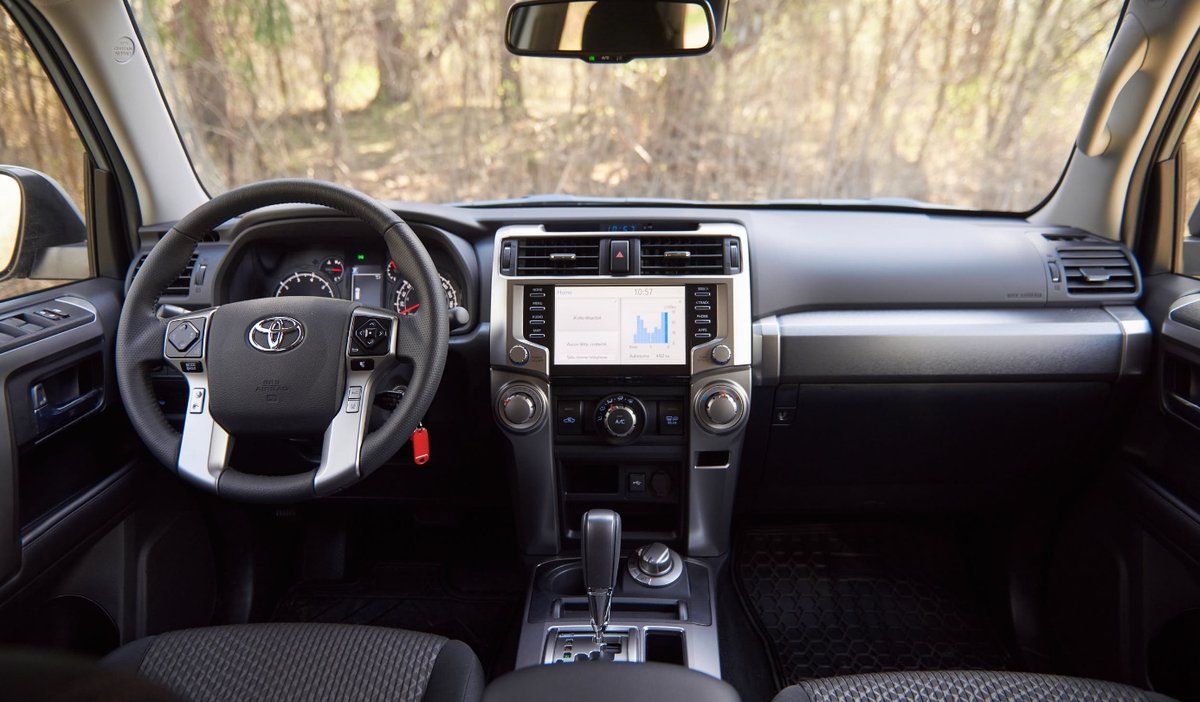
Inside, the fifth generation carried forward ideas from the Lexus GX460, particularly in its robust, glove-operable controls – a subtle nod to its intended use in challenging conditions. The triple-pad instrument panel was distinctive, while seating for three adults in the 60/40 split-bench rear offered practical versatility. An optional third row provided even more passenger capacity.
Cargo capacity was generous, a design element critical for adventurers: 2,548 liters (90 cu-ft) with all seats down, and 1,217 liters (43 cu-ft) with all seats up. The 2014 facelift brought a 6.5-inch Entune infotainment system with GPS navigation (standard for Limited, optional for SR5/Trail) and Bluetooth, bringing modern connectivity without sacrificing the cabin's functional focus. Later updates in 2019 added modern driver-assist technology and additional USB ports, showing a gradual integration of tech into its robust framework. The TRD Pro trim, introduced later, enhanced its rugged aesthetic with upgraded shocks, springs, tires, and skidplates, making its off-road intent visually undeniable.
The Next Chapter: A Modern Revolution (6th Generation: 2025 Model Year)
After an impressive 15-year run, the fifth-generation 4Runner finally makes way for a "revolution" in the form of the sixth generation, introduced in spring 2024 for the 2025 model year. This is not just an update; it's a complete reimagining that blends its legendary heritage with modern styling, advanced technology, and improved efficiency, all built on the robust TNGA-F platform shared with other formidable Toyota trucks and SUVs.
Exterior Design: Echoes of the Past, Vision of the Future
The sixth-generation 4Runner's exterior design is a masterful fusion of past and future. It proudly echoes the original 4Runner's rugged aesthetic but reinterprets it through a modern lens. Horizontal LED headlights with integrated daytime running lights give it a contemporary, aggressive gaze. The angular grille and a lower air intake protected by a rock slider shield/apron instantly communicate its off-road readiness. Flared wheel arches emphasize its wide, stable stance, and the raked-forward C-pillars add a dynamic, powerful profile. The TRD Pro version further enhances this with additional black plastic moldings, underscoring its extreme capability. This design is clearly an evolution, not a departure, from its tough roots. And yes, the retractable rear window in the tailgate? It's still there, a perfect link to its storied past.
Interior Design: A Leap into the Modern Age
Step inside the sixth-generation 4Runner, and you’re greeted by a truly modern cabin – a significant upgrade from its predecessor. While the four-spoke steering wheel bears a resemblance to the previous generation, almost everything else has been brought into the 21st century. An 8-inch or 10-inch infotainment touchscreen dominates the center stack, providing intuitive access to navigation and media. The instrument cluster is now a 7-inch digital display (upgraded to a substantial 12.3-inch for higher grades), offering customizable information at a glance.
The center console is thoughtfully designed, housing the transmission and available 4x4 controls in an ergonomic layout. Seating offers a choice of fabric or Alcantara/artificial leather bucket seats, alongside a practical 60/40 split-folding rear bench. This interior design seamlessly blends rugged functionality with the comfort and digital connectivity expected in a modern vehicle, making it more appealing for daily commutes without sacrificing its adventurer spirit. Crucially, it comes equipped with Toyota Safety Sense 3.0, including lane-keep assist, adaptive cruise control, automatic emergency braking, and a blind-spot monitor, ensuring that modern safety is integrated into its design philosophy.
The Unseen Design: Beneath the Surface
While we've focused on the visible interior and exterior design, it’s crucial to remember that much of the 4Runner’s design evolution also happened underneath its skin. The consistent commitment to a body-on-frame chassis, the shifts in suspension from solid axle to independent front, the introduction of coil springs over leaf springs, and the evolving drivetrain options (RWD, AWD, part-time 4WD, locking differentials) all influenced how the 4Runner was designed, built, and perceived. These engineering choices allowed designers the freedom to sculpt a vehicle that could be both comfortable on the highway and supremely capable on the trail, truly embodying the "anti-crossover" ethos.
Four Decades of Intentional Design
The Toyota 4Runner's design evolution is a masterclass in staying true to a core identity while adapting to changing times. Each generation brought its own character, responding to market demands, technological advancements, and a deeper understanding of what adventurers and families truly need. From its raw, utilitarian beginnings to its current sophisticated yet rugged form, the 4Runner has consistently proven that purposeful design, combined with unwavering capability, creates a vehicle that doesn't just sell – it inspires loyalty.
It’s a story of lines and curves that tell a deeper tale: one of resilience, adventure, and the timeless appeal of a machine built to conquer. The 4Runner isn't just designed to look tough; it's designed to be tough, inside and out. And that, ultimately, is why its journey continues to captivate drivers around the world.